Ayia Napa, Cyprus: Best Time to Visit, Airport Transfers, Blue Flag Beaches, and Things to Do
Cyprus, Ayia Napa Location
Ayia Napa sits on the southeast coast of Cyprus in the Famagusta district, 50 km by road from Larnaca Airport via the A3 motorway. The town holds 14 Blue Flag beaches, led by Nissi Beach, alongside WaterWorld Themed Waterpark, Cape Greco National Forest Park, and a nightlife strip on Ayias Mavris Street. Summer highs reach 30-33°C, and the main season runs from May to October.
Where Is Ayia Napa and What Is It Known For?
Ayia Napa is a coastal resort town at the far eastern end of Cyprus's southern shoreline, within the Famagusta district, best known for its Blue Flag beaches, clear turquoise waters, summer nightlife, and a mix of family attractions and coastal nature. The nearest international airport is Larnaca International Airport (LCA), approximately 50 km away and connected to Ayia Napa via the A3 motorway. Once a small fishing village, it has grown into one of Cyprus's leading summer destinations, drawing beachgoers, families, and couples, as well as the younger nightlife crowd on which it built its early reputation.
When Is the Best Time to Visit Ayia Napa?
The best time to visit Ayia Napa depends entirely on the purpose of the trip, but May to October covers the full range of beach, nightlife, and outdoor activities.
Beach and swimming conditions peak between June and September, when sea temperatures exceed 24°C and all beach facilities, including lifeguards, water sports providers, and sunbeds, operate at full capacity. Nightlife at maximum venue capacity runs June to August, with the broader season extending March to November.
Families and visitors prioritising sightseeing or active outdoor activities over peak-season heat and crowds will find April to early June and late September to October the more practical windows, with lower temperatures and shorter queues at attractions such as WaterWorld Themed Waterpark.
Ayia Napa functions primarily as a summer-season resort. Visiting outside May to October means reduced hotel availability, fewer transport options, and limited access to the waterpark, boat trips, and most nightlife venues.
What Is the Weather Like in Ayia Napa?
Ayia Napa has a Mediterranean climate with hotsummersandmildwinters, and sea temperatures warm enough for swimming from late spring through autumn.
Conditions break down by season as follows:
Summer (June to August): Daytime highs of 30 to 33°C, night temperatures of 19 to 22°C, sea temperatures of 24 to 28°C.
Spring (April to May) and early autumn (September to October): Daytime highs of 23 to 27°C in spring and 27 to 31°C in early autumn. Sea temperatures range from 18 to 20°C in April to 25 to 27°C in September and October.
Winter (December to February): Daytime highs of 16 to 18°C, nights around 7 to 9°C, sea temperature 16 to 19°C. Most hotels and venues reduce operations or close entirely.
How Can You Get to Ayia Napa From Larnaca Airport?
Kapnos Airport Shuttle operates scheduled shared shuttle buses between Larnaca Airport and Ayia Napa. The standard journey time from Larnaca Airport to Ayia Napa is approximately 45 to 55 minutes in normal traffic. At Larnaca Airport, passengers board at the designated Kapnos stop outside the arrivals terminal.
In Ayia Napa, the shuttle stops at two fixed locations:
Ayia Napa Square, bus stop at Arch. Makariou III 19, close to the Hard Rock Cafe
Nissi Avenue 80, bus stop in front of Sunwing Sandy Bay hotel
Travellers pre-book seats online; tickets can be purchased up to 60 minutes before departure via the JCC secure payment gateway, with free cancellation or amendment available up to 24 hours before travel.
How safe is the airport transfer to Ayia Napa?
Kapnos holds ISO 9001:2015 for Quality Management and ISO 39001:2012 for Road Traffic Safety Management, the first such road safety certification awarded to a passenger transport operator in Cyprus. Coaches added in 2024 are Euro 6-compliant and fitted with three-point seat belts, and the fleet undergoes annual mechanical inspection.
How Good Are the Hotels and Resorts in Ayia Napa?
Ayia Napa's accommodation ranges from budget apartments near the town square to 4 and 5-star beachfront resorts, with the largest resort clusters along the western beach corridor toward Makronissos and Agia Thekla.
Three distinct accommodation zones shape the choice:
Town centre and Ayia Napa Square area: Hotels and serviced apartments within walking distance of the club strip, restaurants, and harbour. Suited to nightlife-focused visits where beach access is secondary to central location.
Nissi Beach and Vathia Gonia (Sandy Bay): A mix of beachfront and near-beach resorts offering pools, all-inclusive and half-board options, and direct access to the area's busiest beaches. This stretch combines energy with usable family infrastructure during morning hours.
Landa, Makronissos, and Agia Thekla: Larger resort complexes in a quieter setting, positioned close to WaterWorld Themed Waterpark and the calmer beaches. These resorts typically offer on-site kids' clubs, multiple pools, and spa facilities and frequently appear in "all-inclusive family holiday" search results.
Many resorts across all three zones offer direct or very short-walk access to at least one Blue Flag beach, which drives repeat bookings from families and beach-focused travellers who prioritise proximity to the beach over the nightlife district.
What Are the Best Things to Do in Ayia Napa?
Ayia Napa's main activities fall into five categories: beaches, water parks, boat trips, nature, and nightlife. The headline attractions run from the coastline to the town centre:
Blue Flag beaches: With 14 Blue Flag beaches along the shore. Nissi Beach is the most famous, while Landa, Makronissos, and Agia Thekla offer calmer water suited to families.
WaterWorld Themed Waterpark: Located on the western edge of Ayia Napa near Makronissos and themed entirely on ancient Greek mythology, WaterWorld ranks among the largest themed waterparks in Europe, with over 25 rides and more than 4 million visitors to date. Rides range from toddler splash zones to high-speed adult slides, making it one of the few attractions that serves all age brackets in a single visit.
Ayia Napa Harbour and Marina: The harbour is the town's main departure point for boat trips, lined with harbour-front tavernas and sea views, with traditional fishing boats still operating alongside the leisure fleet. The newer Ayia Napa Marina features a waterfront lined with restaurants, shops, and berths for larger yachts.
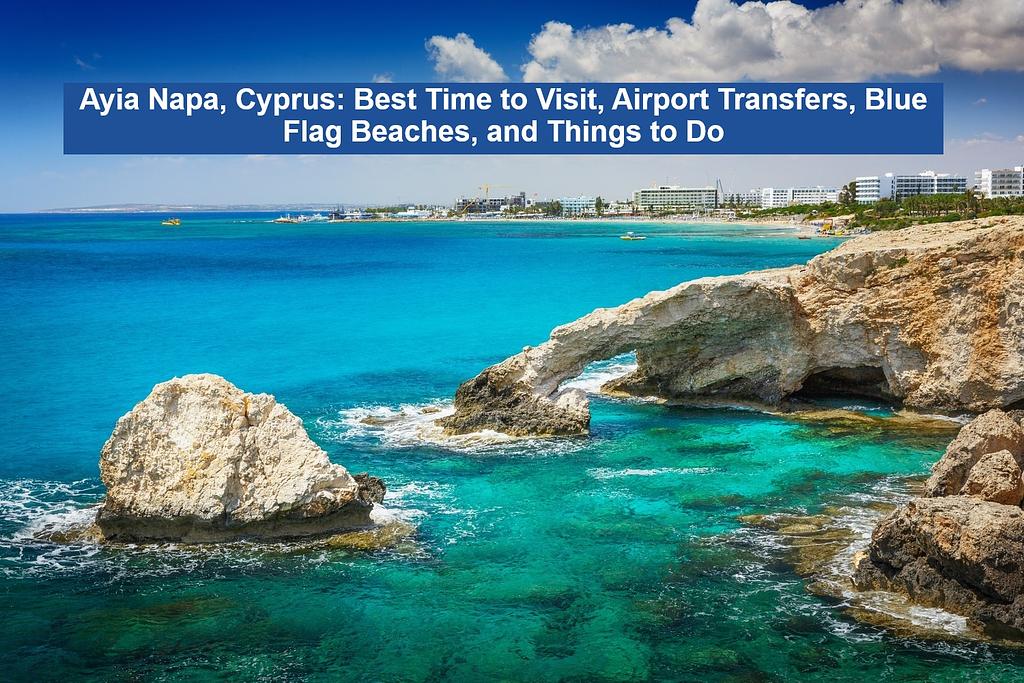
Cape Greco National Forest Park: This protected headland sits 5 to 10 minutes' drive east of Ayia Napa. Hiking and cycling trails run along the cliffs, leading to the Ayia Napa sea caves, coastal viewpoints, and snorkelling spots in clear, calm water.
Boat cruises: Cruises from Ayia Napa harbour follow the coastline east past the sea caves, Cape Greco, and Konnos Bay into the Blue Lagoon, with routes extending toward Fig Tree Bay in Protaras and a viewing point for the Famagusta ghost town. Most full-day cruises include swim stops and an onboard BBQ or buffet lunch.
Parko Paliatso Luna Park: The town's amusement park offers rides for all ages, from a Ferris wheel and bumper cars to the high-thrill Sling Shot.
Ayia Napa Monastery: This 16th-century monastery sits at the heart of the town centre, a quiet historic landmark surrounded by the modern resort, open to visitors with no booking required.
Sculpture Park: Set on the cliffs above the sea alongside the neighbouring Cactus Park, the Sculpture Park displays large open-air artworks along coastal walking paths, free to enter and open year-round.
Which Blue Flag Beaches Can You Visit in Ayia Napa?
Ayia Napa holds 14 Blue Flag beaches, representing one of the highest concentrations in the Mediterranean. All 14 meet Blue Flag standards for water quality, safety infrastructure, and environmental management.
Listed from east to west, the 14 beaches are: Konnos Bay, Kermia, Ammos tou Kambouri, Glyki Nero, Pantachou, Loukkos tou Mandi, Katsarka, Pernera, Vathia Gonia (Sandy Bay), Nissi Beach, Nissi Bay, Landa, Makronissos, and Agia Thekla.
Grouped by character, they divide into three broad categories:
Lively and iconic: Nissi Beach and Nissi Bay, high footfall, full water sports, beach bars, and music throughout the day.
Family-friendly and calmer: Landa, Makronissos, Vathia Gonia, and Agia Thekla, gently shelving sand, lower crowd density, and resort-adjacent access.
Scenic and nature-focused: Konnos Bay and Glyki Nero, both situated toward Cape Greco, offering clearer water and a more sheltered setting.
Every major Blue Flag beach in Ayia Napa operates lifeguard cover during summer, sunbed and umbrella hire, at least one beach bar or kiosk, and water sports providers ranging from jet ski hire to parasailing.
What is Nissi Beach famous for?
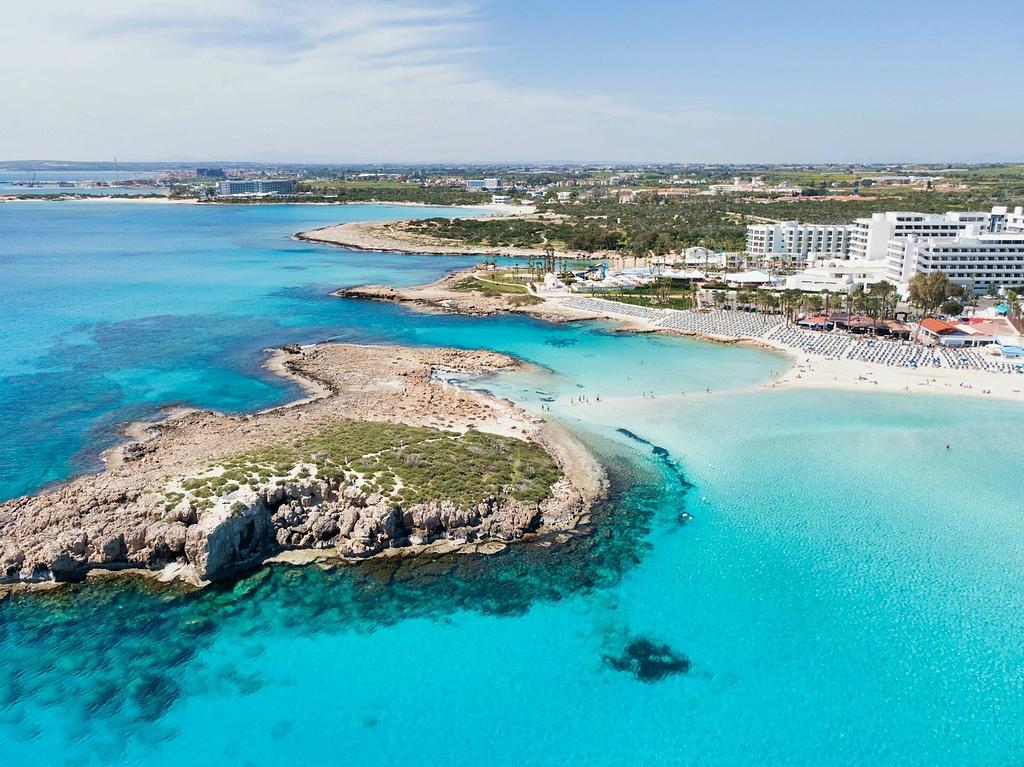
Nissi Beach is famous as Ayia Napa's busiest and best-known beach, a long sandy bay with shallow, crystal-clear water and a small offshore islet. "Nissi" means island in Greek, and the islet is reachable on foot through knee-deep water during the summer months. The beach holds Blue Flag certification and offers a full range of water sports, including jet skis, parasailing, banana boats, and pedaloes, as well as sunbeds, umbrellas, showers, changing rooms, and toilets. Known for its lively atmosphere, beach bars, and daytime music, Nissi draws a predominantly younger crowd from mid-morning onward. Families with young children typically find the calmer morning hours more suitable before the beach reaches peak activity.
Nissi Beach Ayia Napa, Cyprus
What makes Landa Beach unique?
Landa Beach is set apart by its calmer, quieter character, a smaller Blue Flag beach positioned between Nissi and Makronissos and sometimes called Golden Beach or Golden Paradise Beach. Fine golden sand slopes gently into clear, calm water, conditions that suit families with younger children and swimmers seeking easier entry. Landa maintains a lifeguard station throughout summer, sunbed and umbrella hire, a snack bar, water sports facilities, and Wi-Fi access, with a picnic area and shaded forest directly behind the beach. A seafront walkway connects Landa to Nissi Beach, making it practical to access both in a single day without needing transport.
How safe are the beaches and the water for swimming in Ayia Napa?
Ayia Napa's beaches are safe and well-monitored, with lifeguards present at major beaches, including Nissi and Makronissos, throughout the summer. Lifeguards operate a coloured flag system to signal conditions, with a red flag meaning no swimming. The Mediterranean waters around Ayia Napa are calm, with no dangerous currents, and water sports are offered by licensed providers with safety gear. In a beach emergency, dial 112, the number that operates across Cyprus, connects to English-speaking operators, and is free from any mobile or landline, including phones without a SIM card.
Which Boat Trips and Coastal Experiences Leave From Ayia Napa?
Ayia Napa harbour serves as the main departure point for all leisure boat trips along the southeast coast of Cyprus. Two primary itinerary formats operate during the May-to-October season.
Full-day cruises head east from the harbour, passing the Ayia Napa sea caves, rounding Cape Greco, continuing to Konnos Bay and the Blue Lagoon, then extending toward Fig Tree Bay in Protaras and a viewpoint for the Famagusta ghost town. Most include 2–3 swim stops in clear waters, snorkelling opportunities at sea caves, and an onboard BBQ or buffet lunch. Half-day cruises follow a shorter version of the same route, typically ending at Konnos Bay or Cape Greco.
Operators structure trips by audience: family cruises prioritise calm water stops and earlier return times; party boats serve the afternoon-to-evening market and skew toward adults; pirate-style boats attract families with younger children through themed entertainment.
Morning departures provide calmer sea conditions and are better suited to families and those prone to seasickness. Afternoon and evening cruises align with the adult and party market.
Where Can You Eat and Go Out in Ayia Napa at Night?
Ayia Napa's restaurants concentrate in two areas: the harbour front for fish and traditional Cypriot cuisine, and Nissi Avenue for tourist-oriented international dining. The harbour area holds several tavernas serving fresh fish and meze; grilled octopus, calamari, and kleftiko are consistent menu fixtures. Moving toward the town square and along Nissi Avenue, the options broaden into Italian restaurants, Asian fusion, steakhouses, burger bars, and fast-food chains.
The club and bar strip centres on Ayias Mavris Street, where venues open from early evening and remain open until the early hours throughout the summer. The format ranges from karaoke bars and smaller cocktail bars to beach clubs and large multi-room nightclubs. The full nightlife season runs late spring through October, with peak activity in June, July, and August. Outside these months, most clubs and bars either significantly reduce their hours or close entirely.
How Family-Friendly Is Ayia Napa?
Ayia Napa offers a range of family-friendly accommodation, beaches, attractions, and organised activities. Family-oriented hotels and all-inclusive resorts concentrate near Nissi, Makronissos, and Agia Thekla, a stretch of coastline that combines Blue Flag beach access with resort pools, kids' clubs, and spa facilities. The calmer Blue Flag beaches along this corridor, Landaa, Makronissos, and Vathia Gonia, have gently shelving sand and generally settled water, conditions that suit young children and less confident swimmers,
WaterWorld Themed Waterpark caters to the full age range, with toddler splash areas, children's zones, and family rides, as well as higher-intensity attractions for teenagers and adults. Parko Paliatso Luna Park, an amusement park operating in the town, offers a comparable range of rides for visitors of all ages, including a Sling Shot, Ferris wheel, and bumper cars.
Family boat trips from Ayia Napa harbour, including the Discovery boat cruise, which incorporates swimming stops and a BBQ lunch, provide a structured half- or full-day activity suitable for children of most ages. The boat trip season runs May to October and is weather-dependent. Families with younger children often prefer May–June or September–October, when temperatures are below peak-summer levels, and late-night crowds are smaller.
Is Ayia Napa Safe for Tourists?
Yes, Ayia Napa is considered one of the safest resort towns in the Mediterranean, with well-developed tourist infrastructure and efficient emergency services. Keeping valuables secure and out of view in parked cars remains a sensible practice anywhere.